Ethiopia Hosts Inaugural Church Forest Academy to Advance Faith-Led Ecological Restoration
Between 24th October and 3rd November 2026, Ethiopia Orthodox Tewahedo Church forests became living classrooms as the Church Forest Academy brought together faith-inspired practitioners from Kenya, Uganda, Tanzania, Ethiopia, Nigeria, England and Germany to study ecotheology, biodiversity conservation, forest restoration and climate resilience. Through scientific teaching, theological reflection and field visits, participants explored agroforestry, seed conservation, watershed management and farmer-managed natural regeneration, connecting environmental stewardship with livelihoods and interfaith cooperation.
The Academy, convened by the Ethiopian Orthodox Tewahedo Church Development and Inter-Church Aid Commission (EOC-DICAC) and the Nairobi based OikoDiplomatique, brought together a varied group of participants to experience and learn about millennial old forest conservation practice deeply rooted in faith and theology.
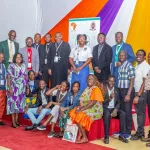
Its opening ceremony took place on 26th October 2026 at Hilton hotel, Addis Babab. In his keynote address, Dr Sam Kobia, Former General Secretary of the World Council of Churches, described church forests as “a beacon of hope for the world.” He hoped the academy would inspire churches worldwide to establish forests and urged duty bearers to safeguard natural forests.
“Doctrines divide but joint purpose unites.” He emphasized.
In his remarks, the AACC Executive Secretary for Youth, Muyunga Brian, called for restoration rooted in ecological justice as he also urged religious leaders to support youth leadership in conservation.
When asked how the church has managed to protect the forests for centuries, EOC-DICAC’s Gebreselassie Atsbaha explained that the church holds theological reflections with communities within and outside the church forests to deepen appreciation of their sacredness. These conversations help communities understand that “caring for the forests is God’s commandment and a very significant part of their worship.” He added that livelihood initiatives, including beekeeping and agroforestry, economically empower communities while reducing pressure on forests.
Mr Tewany Seifesellassie, the Senior Climate Advisor and Head of the Peace, Advocacy, and Ethics Department at EOC-DICAC also highlighted the role of intentional theological education for the church leaders in preserving this tradition.
On the second last day of the academy, participants shared key learnings and inspirations from the academy. During this session, Susan Mwangi, a lecturer at Tangaza University noted that she learnt that communal forest protection is evidence of ecological conversion: inward transformation shaping relationships with nature.
“All of us have a role to play,” she said, emphasizing participation across genders and generations.
For Dr Alan Channer, OikoDiplomatique’s co-director, the Ethiopian example demonstrated worship extending into care for creation.
“Forests are the living embodiment of the sacred obligation to care for creation,” he reflected.
Dr Ptah Solomuzi Gichira likened walking through the monasteries to “retracing the footsteps of Adam in Eden.” He celebrated the Ethiopian Orthodox Church, one of the founding member churches of the AACC, as an African source of hope for ecological stewardship.
Mr James Kagwe from Kenya and Chief Nyangatom of Southern Ethiopia learned that restoring nature goes beyond planting trees to restoring values, integrity and discipline, in ways that bring ecosystems and humanity back to life.
That inspiration was already prompting plans. Bishop Leina Ole Mootian of the Methodist Church in Kenya expressed his intention to initiate church forests upon returning home, hoping they would become a lasting testimony to lessons learned in Ethiopia.
Dr Carol Munyao, National Regreening and Farmer‑Managed Natural Regeneration (FMNR) Lead at World Vision Kenya, emphasized that deeper transformation is required for land restoration. She noted that FMNR is a key component of forest creation and expressed the World Vision’s commitment to continue training stakeholders to scale up forest creation.
The interfaith encounter resonated strongly with Ulrich Bosch from Germany who called for more forest learning opportunities.
Mariam Wamboi, a Muslim woman religious leader from Kenya, stressed that disasters do not discriminate by religion; restoring creation requires shared action.
Dr Patrick Nyabul, chairperson of the University of Nairobi’s Department of Philosophy and Religious Studies, described church forests as scriptural teaching in practice.
“We have been motivated, inspired and equipped to contribute towards transforming places of worship into centers of restoration, where faith nurtures ecological responsibility and inspires action for justice.” Noted Ms Nkatha Kobia, Co-director of OikoDiplomatique, as she appreciated the commitment of the organizers, faculty, and participants.
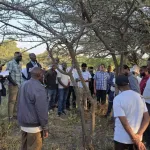
The 10-day interfaith learning journey took place in lecture halls, monasteries, under trees, in ancient church caves and during Orthodox church services.
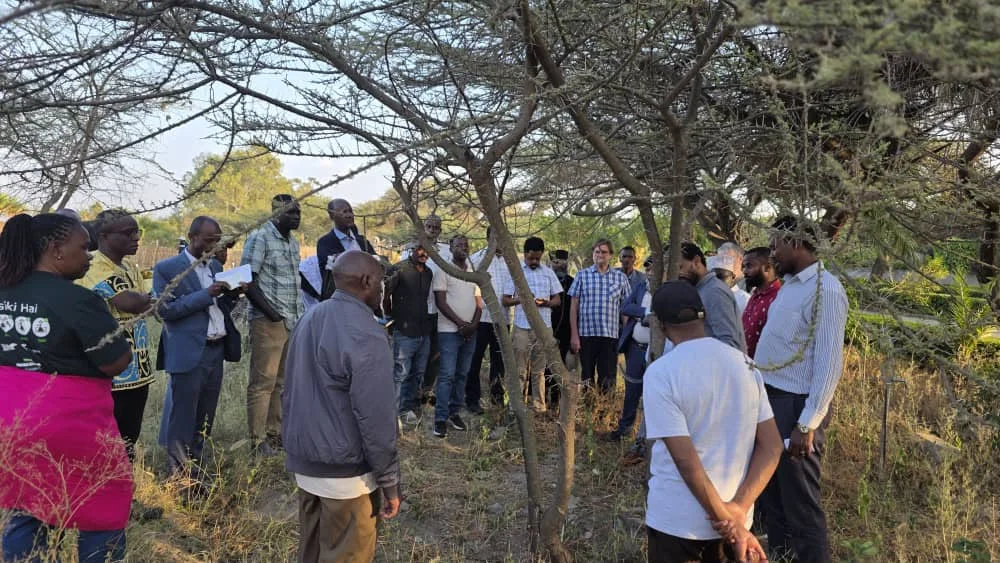
In the photo: Participants learning about indigenous seed harvesting in Zuway, Ethiopia on 7th October 2026. [Credit: Daniel Manyasi]