AACC Convenes Church Leaders for a Regional Capacity Strengthening Workshop on Ethical Leadership and Eco-Stewardship
From 7th to 9th April 2026, the All Africa Conference of Churches (AACC) gathered church leaders, women, and youth leaders from Burundi, Ethiopia, Kenya, Rwanda, South Sudan, Tanzania, and Uganda in Arusha, Tanzania, for a regional capacity strengthening workshop on ecclesial ethical leadership development and eco-stewardship. Hosted by the Evangelical Lutheran Church in Tanzania, the meeting created space for reflection on the role of faith leadership in addressing the continent’s pressing challenges. The workshop opened with a devotion that underscored humility, unity, and servant leadership as central Christian values, reminding participants of the call to lead with integrity, love, and accountability.
While opening the keynote address, Rev. Dr. Fidon Mwombeki emphasized that leadership is a sacred trust rooted in service to God and community. Drawing from biblical teachings, he described leadership as stewardship and called on leaders to care for both people and creation. He further stressed the importance of investing in young leaders through mentorship, training, and intentional succession planning.
The workshop benefited from resource persons drawn from relevant institutions, including Ecolife Africa and the African Union Advisory Board Against Corruption, among others. Sessions covered a range of thematic areas. Rev. Dr. Lesmore G. Ezekiel engaged participants on transformative and ethical leadership and advocacy as a prophetic mission of the Church. Ms. Faustina Nillan facilitated discussions on gender participation in leadership in both church and society while Mr. Adrian Chikowore guided reflections on economic and ecological issues affecting Africa.
Participants reflected on Africa’s economic realities, particularly the rising public debt and its implications for social justice. They noted that debt is not only an economic issue but also a moral concern, urging churches to strengthen advocacy on accountability and responsible resource management.
Towards the end of the workshop, participants developed country-specific action plans aligned to the thematic areas covered. They were also inducted into AACC-coordinated platforms, including AFAN-CJ, Economic Justice Champions, and Male Champions for Gender Justice to strengthen ongoing engagement and collaboration.
The meeting provided an opportunity for critical reflection on leadership practices within the Church and equipped participants with knowledge and skills to advance ethical leadership and eco-stewardship in Africa. Participants expressed profound appreciation to AACC for convening the workshop, which reaffirmed the commitment to accompany churches in promoting justice and sustainable development across the continent.
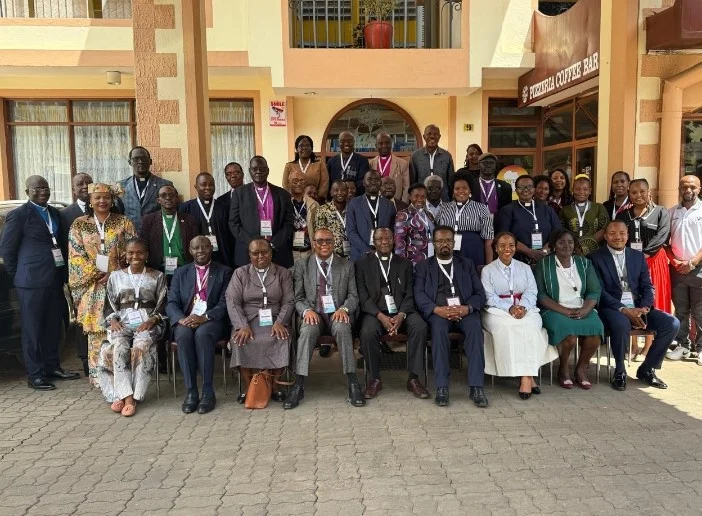
In the photo: Group photo of participants. [Courtesy: Faustina Nillan]